 Arboris Botanical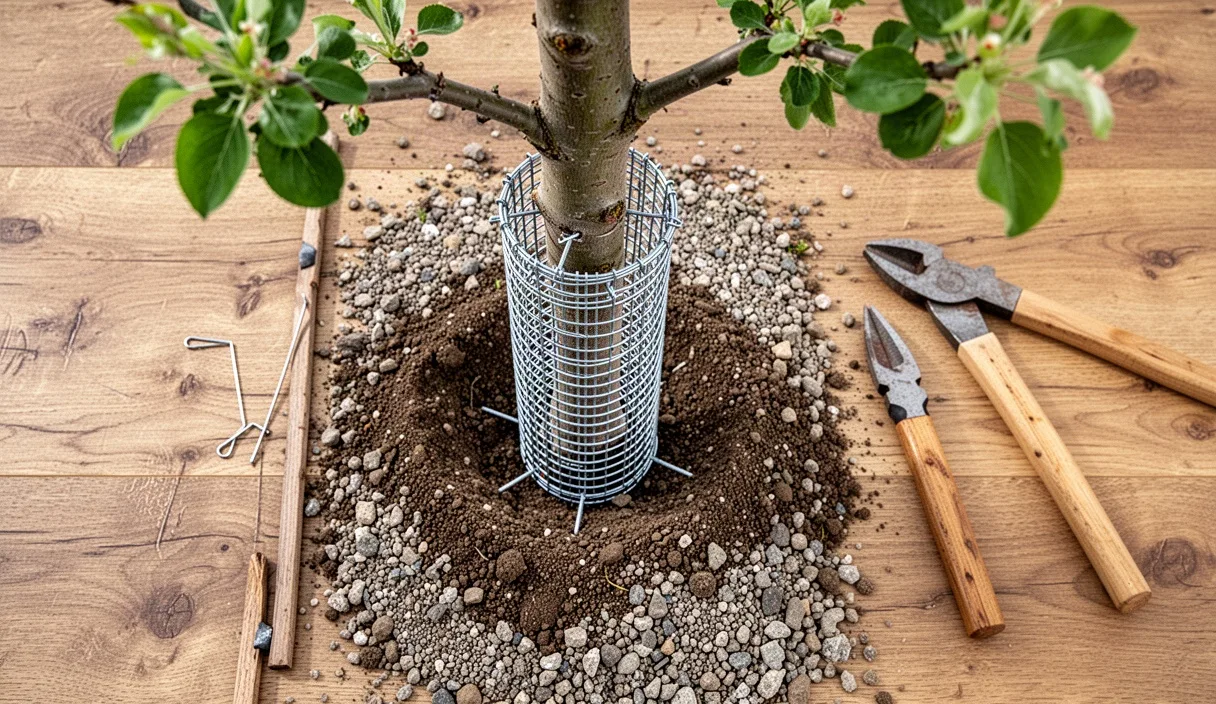
Rodents kill young fruit trees by chewing vascular cambium through the winter. Meadow voles, pine voles, and cottontail rabbits cause catastrophic girdling when ground cover dies back and snowpack restricts their diet to woody stems. An unprotected apple, pear, or cherry block can suffer 15 to 40 percent mortality in a single winter. Replacing two-year-old feathered trees costs labor, purchase price, and lost production time over three seasons.
Physical barriers remain the standard defense in commercial orchards. Repellent sprays wash away during late-season sleet, and broadcast rodenticides pose secondary kill risks to local raptors while degrading in persistent moisture. Correctly installed trunk guards isolate the tender bark, maintain bark health through fluctuating temperatures, and deny pest access from below the soil line to the top of the local snowpack.
Vole and cottontail feeding patterns on young orchard bark
Meadow voles (Microtus pennsylvanicus) feed directly at the base of the trunk. They work under dense thatch or snow cover, stripping bark from the root flare up to four or six inches above the soil surface. Their teeth leave irregular, multi-directional gnaw marks roughly 1/16-inch wide. Because meadow voles tunnel beneath heavy snowdrifts, damage often stays hidden until the spring thaw reveals a completely girdled stem.
Pine voles (Microtus pinetorum) present a subterranean hazard. These rodents build extensive tunnel networks between two and twelve inches beneath the soil line, feeding on the bark of taproots and upper lateral roots. Unlike meadow voles, pine vole damage frequently occurs with zero visible signs on the above-ground trunk until the tree leans, fails to push bud break, or starves mid-summer under fruit load. Orchards planted on light, well-drained soils show higher pine vole activity than blocks on heavy clay.
Eastern cottontails (Sylvilagus floridanus) target tissue above the snowline. Rabbits chew the bark cleanly at a 45-degree angle, shearing side shoots up to a pencil thickness and leaving wide, vertical chisel marks on main scaffold branches and central leaders. A single adult rabbit can girdle an apple sapling within two nights when crusting snow supports their weight above the lower guards. Monitoring droppings and clipped twigs around tree rows determines which pest dominates the plot.
Hardware cloth versus plastic mesh: durability and air movement
Material selection determines how long a guard lasts before requiring replacement or field adjustment. Galvanized hardware cloth and perforated plastic protectors dominate the commercial sector. Each material alters the microclimate of the lower trunk differently.
Galvanized hardware cloth with a 1/4-inch square mesh offers long-term durability and pest exclusion. The 1/4-inch grid prevents entry by juvenile meadow voles, which can squeeze through 1/2-inch gaps. Wire guards allow unrestricted air drainage, which dries the bark surface quickly after freezing rain and discourages crown gall and fungal cankers. Hardware cloth holds its shape under heavy snow loads, staying open instead of crushing inward against green bark. The initial material cost runs higher than synthetics, but wire cylinders often last six to eight years when made with hot-dipped zinc coatings.
Plastic mesh tubes and solid spiral wraps present lower material costs and quicker initial field installation. However, solid spiral guards create severe microclimate risks. They trap humidity against the bark, harbor overwintering woolly apple aphids, and cause trees to delay winter hardening by shielding tissue from early autumn cold cues. This trapped moisture also softens periderm tissue, making it more vulnerable to gnawing once the plastic cracks. Perforated plastic mesh avoids some moisture accumulation, but solar ultraviolet light degrades polypropylene within two to three seasons, causing it to become brittle and shatter under winter winds.
| Guard Material | Vole Exclusion Rating | Air Movement Factor | Field Lifespan | Labor Need to Adjust |
|---|---|---|---|---|
| 1/4-inch Galvanized Mesh | High | Full passive circulation | 6 to 8 seasons | Moderate |
| 1/2-inch Hardware Cloth | Poor (allows juveniles) | Full passive circulation | 6 to 8 seasons | Moderate |
| Perforated Poly Mesh | Moderate | Moderate circulation | 2 to 3 seasons | Low |
| Solid Vinyl Spiral Wrap | Moderate | Zero circulation (traps damp) | 1 to 2 seasons | High |
Correct installation depth to block burrowing rodents
Surface placement fails because pine voles and meadow voles dig through surface mulch to feed beneath the guard edge. To stop this movement, embed the bottom rim of the guard into the mineral soil profile.
- Clear all wood mulch, straw, and organic residues in a 12-inch radius around the trunk base to expose bare mineral soil.
- Cut 1/4-inch galvanized hardware cloth to length, allowing at least a 3-inch overlap and a cylinder diameter of four to six inches around the trunk.
- Excavate a narrow trench two to three inches deep around the trunk root flare using a planting spade or circular trenching bit.
- Seat the wire cylinder into the trench, checking that the base sits uniformly below the soil surface without catching on shallow structural roots.
- Backfill the trench with crushed angular pea gravel or coarse mineral sand rather than native topsoil or mulch. Sharp stone aggregate discourages voles from burrowing through the base line.
- Secure the vertical seam of the hardware cloth cylinder using three 16-gauge galvanized cage clips or UV-rated nylon ties.
Never pile organic wood mulch back against the exterior of the guard. Mulch creates an insulating zone that invites rodents to nest against the wire, raising the effective floor for burrowing and bypassing the buried guard edge.
Height calculations based on 10-year local snowfall records
Guards that stand 18 inches tall protect trees in areas with low snow cover, but they become useless once snowdrifts accumulate. Rabbits walk over the top of the snowpack and strip trunk tissue above the wire rim. Determine the required guard height by pulling winter weather data from the nearest municipal or agricultural weather station.
Locate the maximum recorded single-storm snow depth over the past ten years for your county. Add 18 inches to that historical maximum to establish the target height of the guard cylinder. The 18-inch safety factor accounts for rabbit reach: an adult cottontail sitting on crusted snow can easily browse stems up to a foot and a half above foot level.
Consider an orchard site in south-central Michigan. If the 10-year snowfall archive shows a peak snowpack depth of 16 inches, calculate guard height as follows:
- Peak 10-year snowpack depth: 16 inches
- Cottontail browsing reach margin: 18 inches
- Sub-surface burial depth: 3 inches
- Total cut length of wire cloth: 37 inches
In regions where drifting snow regularly exceeds 30 inches, installing 48-inch full wire cylinders on every tree creates structural challenges and high costs. In these blocks, combine a 24-inch buried metal wire cylinder with an external spray program or install supplemental rabbit exclusion fencing around the perimeter of the orchard block.
Spring inspection checklists to expand guards before trunk thickening
Trunk girdling caused by forgotten or tight guards can ruin a tree faster than rodents. Young fruit trees in modern high-density systems can expand their trunk diameter by 1/2 to 3/4 inch in a single vigorous growing season. As early spring sap flow begins, check every guard before active cambial cell division causes trunks to press against the wire mesh.
Pre-Budbreak Inspection
- Inspect the soil seal around the base of each cylinder to verify winter frost heaving has not lifted the wire out of the ground.
- Check the interior of the guard for grass buildup, weed roots, or debris dropped by wind, which blocks air movement and attracts moisture.
- Confirm that the trunk maintains at least 1.5 inches of open clearance from the wire on all sides.
- Look for lower suckers or low scaffold limbs pressing into the top rim of the hardware cloth.
Post-Bloom Maintenance
- Remove any clips or ties on cylinders where trunk expansion has reduced the clearance to under one inch.
- Expand the cylinder overlap or replace the guard with a wider section cut from fresh hardware cloth roll.
- Rake back any organic weed mulch that accumulated around the base of the guard during spring mowing runs.
- Examine the bark for signs of rub abrasions where wind movement has vibrated the tree against the wire cylinder, adjusting support stakes if necessary.
Common mistakes
Orchardists often make small field errors that destroy the protection offered by guards:
- Installing cylinders too narrow: Tight three-inch cylinders choke trees by the second year. Build cylinders at least five inches in diameter from day one.
- Neglecting weed control: Allowing tall grasses to grow up through wire mesh creates a protected tunnel that feeds voles directly against the trunk.
- Using non-galvanized wire: Uncoated steel mesh rusts out at the soil line within fourteen months, opening access holes for burrowing pine voles.
- Leaving plastic wraps on year-round: Solid vinyl protectors bake trunks during hot summer days and hide infestations of dogwood borer larvae.
Practical next steps for the orchard block
Walk your blocks immediately after the first light ground frost. Check ground cover density along the tree line; mow drive alleys short and sweep flail mowers tight to the berm to remove all protective rodent habitat within three feet of the trunks.
Audit hardware inventory early in the autumn. Calculate how many linear feet of 1/4-inch galvanized hardware cloth, cage clips, and crushed pea gravel you need to protect new plantings and replace damaged units. If site topography creates deep snowdrifts in specific pockets of the block, mark those rows for taller guards. For operations managing more than ten acres, consult a local extension specialist to evaluate systemic vole density and coordinate perimeter trapping programs before winter ground freeze.